Theatre & Music
Music in Motion: Welcoming Dr. César Leal

|||||
This fall, Dr. César Leal joins the UIC School of Theatre and Music as a Visiting Clinical Associate Professor and Interim Director of Orchestral Activities, bringing a career that spans conducting, musicology, teaching, and interdisciplinary collaboration.
A Colombian-born musician and scholar, Leal is interested in the ways music moves across borders—and how its meaning can change along the way. His convocation talk, Music in Motion, explores that idea through the journeys of the cakewalk from the United States to Europe and cumbia from Colombia’s Caribbean coast across Latin America.
Ahead of his talk, Leal spoke with the School of Theatre and Music about what drew him to UIC, how conducting and musicology inform his work, and what he hopes students will discover about music, collaboration, and their own paths as musicians.
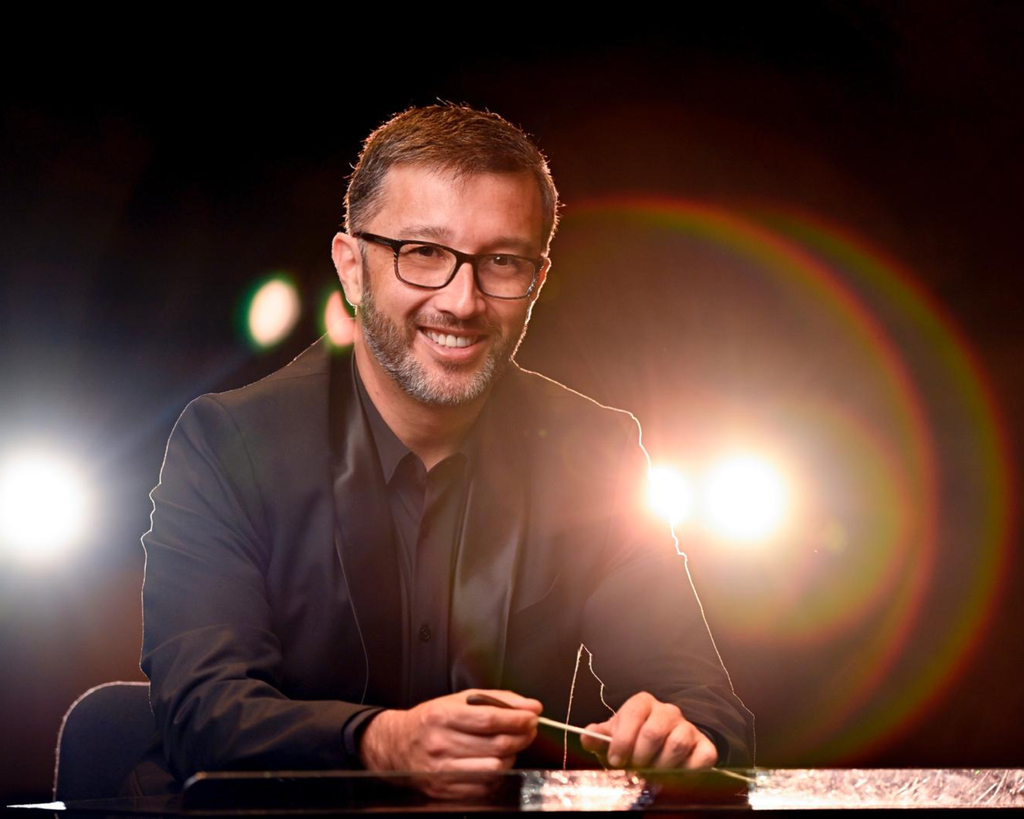
What drew you to UIC, and what are you most excited about bringing to the School of Theatre and Music this year?
What I found really appealing about UIC was the combination of academic excellence, diversity, and, of course, its location in Chicago. UIC serves students with incredibly different backgrounds, experiences, and relationships to music. As a teacher, conductor, and musicologist, I find that very exciting. The School of Theatre and Music was particularly attractive because it is a place where performance, scholarship, and creative work can genuinely interact.
Your career brings together conducting, musicology, and interdisciplinary collaboration. How do those different parts of your work influence each other?
I’ve never actually seen those as separate parts of my career. My work as a musicologist makes me a different kind of conductor, and when I conduct, I'm always wearing my performance hat.
The orchestra and my musicology classes are places where intellectual curiosity and artistic expression go hand in hand. When I conduct a piece, I'm not only interested in the technique, but also how and why it sounds the way it does, where it comes from, and what kind of cultural and historical ideas it carries.
At the same time, as a teacher, I'm thinking about who's making that sound, what's behind the student who is actually giving that experience, and what background and stories are behind the people playing the music.
So we're developing technique and ensemble skill, of course, but we're also asking what the music communicates, why we choose to communicate that way, and who we are when we communicate that way.
Your convocation talk, “Music in Motion,” looks at how music travels across borders and cultures. How did you develop this name, and what first drew you to examining the cakewalk?
I thought the title Music in Motion reflects a lot of things. Personally speaking, I lived in different cities, different countries. And again, in that sense of motion, you start realizing how the world is a place that can influence who you are and the way you see yourself within that world.
I became fascinated with the idea of the cakewalk, which was a dance that was practiced among plantation slaves in the United States. Its journey is extremely complicated because it originated within African-American communities here in the United States, with a history deeply connected to slavery, race, performance, parody in a way, and resistance.Then it traveled across the Atlantic and arrived in Europe and became an enormous, very strong cultural phenomenon in places like Paris around the 20th century.
What fascinates me is what happened when that music and that dance moved from one place to another. The cakewalk did not arrive in France with one fixed meaning. When it got there, it got reinterpreted through French ideas about America, race, modernity, popular culture, and it began to be practiced differently.
In Paris, it became part of the salon culture next to minuets and elegant dances. It became more cosmopolitan. This journey led me to a much larger question that continues to shape my research: What happens to music when it moves?
Music crosses borders and constructs itself around different meanings and travels differently. Sometimes they are preserved, sometimes they are transformed, sometimes they are completely misunderstood. And those stations are actually what I find very, very fascinating.
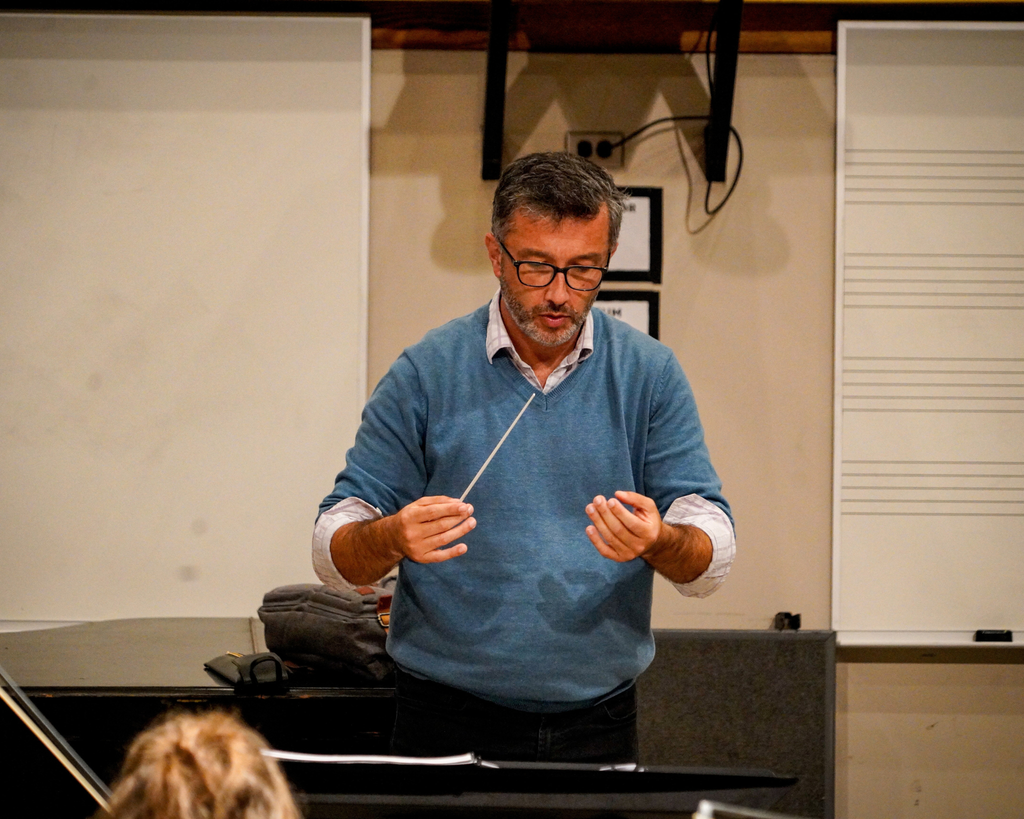
You also trace the movement of cumbia from Colombia’s Caribbean coast across Latin America and beyond. What does that reveal about migration, cultural exchange, and identity?
To me, it's particularly meaningful because, of course, I am Colombian, but it's also a wonderful example of how difficult it is to put music inside neat national boundaries.
In its history on the Colombian Caribbean coast, cumbia reflects encounters among Indigenous groups, African slaves, and European peoples and traditions. You can see and hear that interaction in the instruments they use, in the dance, in the way it moved, and in the way it was practiced.
But cumbia did not stay there. It traveled through Colombia and then across Latin America, where communities made it their own. You now have genres like Mexican cumbia, Peruvian cumbia, Argentinian cumbia—all the way to Patagonia. It basically became a pan-Latin American genre just by traveling.
So for me, it reveals something important about identity. It's not necessarily something static that we simply inherited. It can be created, modified, and recreated through movement, encounter, migration, and cultural exchanges.
Cumbia can be deeply Colombian while simultaneously belonging to communities beyond that place. And that's precisely what makes its history so powerful.
I'm interested in what we carry with us, what changes when we move, and how we continue to negotiate our own ideas of home and belonging.
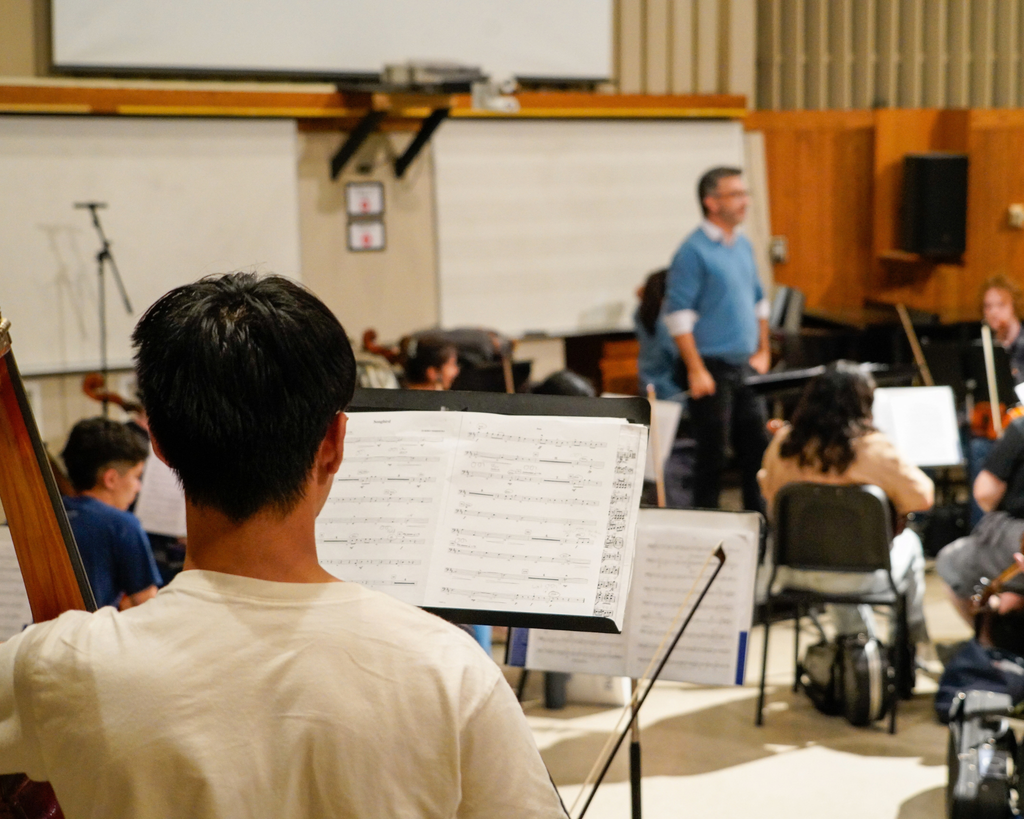
When you look ahead to this year at UIC, what do you hope students take away from working with you in the classroom and in the orchestra?
I want to help each student in their own process of becoming a stronger musician, a more thoughtful listener, and a more independent thinker. Beyond that, I want them to become genuinely curious about people, cultures, and worlds that may be different from their own.
In the classroom, I want students to understand music history as something much larger than a collection of composers, works, and dates. Music history is really a history of people. It is about how people have moved, encountered one another, struggled, celebrated, resisted, adapted, and expressed who they are. I want students to hear music as evidence of those human experiences.
In the orchestra, I want to bring to the foreground something they are already doing: building music collectively. This orchestra is a kind of microcosm of the university, with students from different majors, levels, and areas of study all bringing their own experiences into the same room. What fascinates me is that everyone works independently, prepares seriously, and takes responsibility for their own part, but all of that individual effort is ultimately in service of something larger, without any expectation of being the protagonist. Sometimes you lead, sometimes you support, but everyone has to listen, adjust, and understand how their role fits into the whole. I think there is something society could really learn from orchestras in that balance between individuality, responsibility, and collective purpose.
I also want students to understand that they can design their own path with music. We often move through systems that suggest there is one correct path, one track, one definition of what a successful musician should look like. I do not believe that. Especially at a place like UIC, students bring extraordinary cultural competency skills, lived experiences, and individual perspectives. Our responsibility is to help them search and refine all artistic and technical tools to imagine what their own pathway in music might be.
And the beautiful thing is that the skills you develop as a musician stay with you, even if your career eventually takes you somewhere you did not expect. Musicians understand discipline, leadership, collaboration, patience, and process in a very particular way. We know what it means to begin something that is difficult and to return to it every day. You practice for three hours today, and then you come back tomorrow and do it again. You learn that growth is not immediate. It comes through consistency.
For me, one of the most important things students can discover is that they do not have to leave parts of themselves behind in order to move forward. Their interests, experiences, ambitions, and their Historias can all become part of the path they build. I like that word because in Spanish, historias can hold both histories and stories at the same time. It reminds us that we are shaped by the histories, cultures, communities, experiences, and stories we carry with us, but we are also constantly writing new stories about who we might become. I want students to see their musical lives in that same way, not as something predetermined, but as something they can imagine, shape, and continue creating for themselves.
If you'd like to learn more about Dr. Leal and his research, you can attend Music Convocation on Friday, September 18 at 2:00 PM. This event is free and open to the public. Click the link below to learn more.